

When to Use Claude vs ChatGPT: A Practical Guide for Workspace Users
Wondering when to use Claude vs ChatGPT? Task-by-task guidance on writing, coding, research, and Google Workspace work with GPT Workspace.

When to use Claude vs ChatGPT is one of the most common questions we hear from people who already use AI at work. Both tools look similar on the surface. Both answer prompts, both draft emails, both help with code. The difference shows up when you match the model to the task.
If you work in Google Docs, Sheets, Slides, or Gmail, the decision matters even more. GPT Workspace puts Claude and ChatGPT models in the same sidebar so you can switch without leaving your document. That only helps if you know which model to reach for first.
This guide gives you a practical framework. No benchmark leaderboard. Just clear guidance on when Claude earns the first prompt, when ChatGPT does, and how that maps to everyday Workspace work.
The honest answer: pick by task, not brand
Neither Claude nor ChatGPT wins every category. Independent comparisons consistently describe a split rather than a single champion (Zapier’s Claude vs ChatGPT breakdown is a useful starting point if you want a third-party view).
Claude tends to produce cleaner long-form writing, follow detailed instructions across long sessions, and handle large documents in one thread. Anthropic documents context windows up to 1 million tokens on select models through its API, with compaction features for very long conversations (Anthropic context window docs).
ChatGPT tends to win when the job needs breadth: image generation, voice conversations, web browsing, in-chat code execution, and a large ecosystem of custom assistants and integrations.
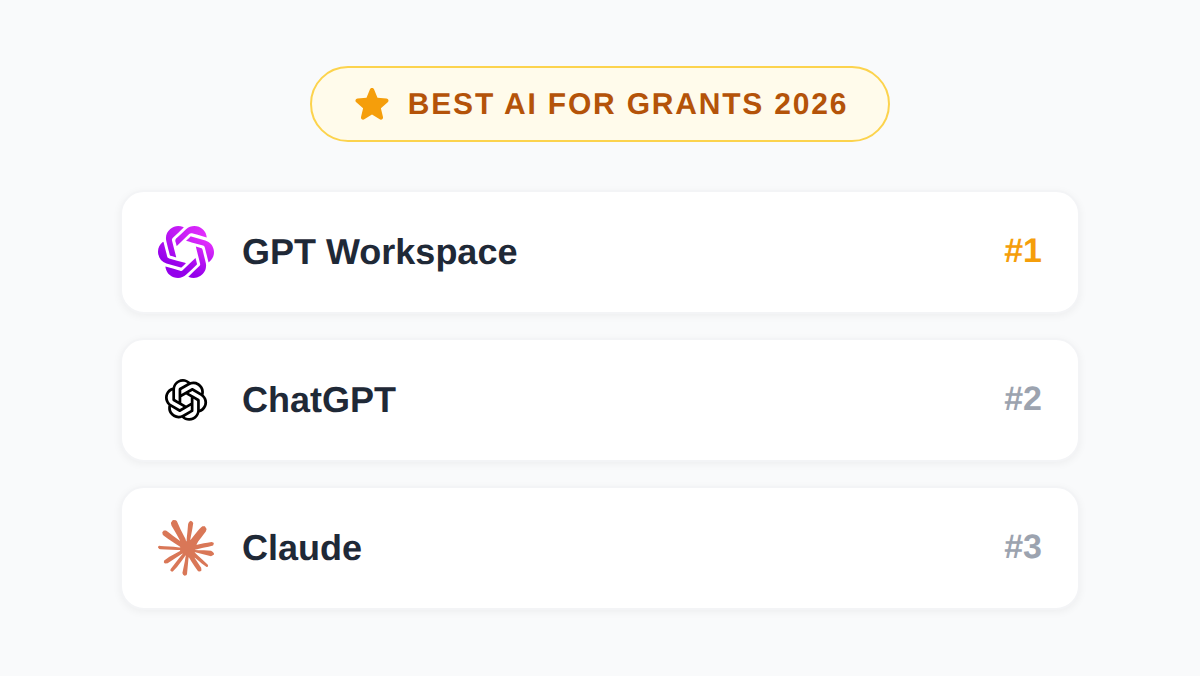
Most people who rely on AI daily do not pick one forever. They build a simple habit: Claude for depth, ChatGPT for versatility. If you only subscribe to one, the sections below should help you choose based on what you actually do each week.
 Claude first
- Long reports and memos
- Document review
- Nuanced email tone
- Complex refactoring
 ChatGPT first
- Images and voice
- Web research
- Run code in chat
- Custom GPT workflows
When to use Claude
Reach for Claude when quality of language, instruction-following, or long-context reasoning matters more than built-in tools.
Long-form writing and editing
Claude’s default style is careful and structured. Reports, proposals, policy drafts, and client-facing copy often need less cleanup than the same prompt sent to ChatGPT. Claude also handles multi-part format instructions well (“three H2 sections, two paragraphs each, no bullet lists”) without drifting mid-document.
In Google Docs, that makes Claude a strong default for first drafts of anything people will read carefully. For rewriting rough notes into polished prose, see how to use ChatGPT in Google Docs for prompt patterns that work across models.
Large document analysis
When you need to summarize, compare, or extract themes from a long file, Claude’s long context window is the main reason to choose it. Anthropic publishes context limits by model on its developer documentation, and newer Claude models support very large inputs when you work through supported API or product tiers.
Practical Workspace examples:
- Docs: Review a 40-page vendor contract and list obligations by party.
- Drive exports: Paste meeting transcripts or research PDFs and ask for decision summaries.
- Sheets narratives: Explain what a quarterly dataset implies before you build charts.
Coding depth and careful refactors
Claude is widely used for agentic coding workflows and multi-file refactors where the model must hold architecture in mind across many steps. Zapier’s 2026 comparison notes Claude Code as a leading agentic coding product for developers who want depth over a quick snippet.
Choose Claude when you are debugging a tricky issue, planning a refactor, or asking for code that includes error handling and comments a teammate can maintain.
Email that must sound human
For Gmail drafts where tone is sensitive (follow-ups, apologies, executive updates), Claude often produces the most natural-sounding prose. It handles constraints like “professional but warm” or “short, no fluff” consistently.
When to use ChatGPT
Reach for ChatGPT when the task needs tools, speed across formats, or ecosystem integrations rather than the most polished paragraph.
Multimodal and creative output
ChatGPT includes image generation, advanced voice mode, and strong support for mixed media workflows. If your job involves creating visuals, narrating ideas aloud, or iterating on creative concepts quickly, ChatGPT is the lower-friction choice. Claude does not offer native image generation in the same way.
Research with live web access
When you need current information, cited summaries, or synthesis of recent news, ChatGPT’s browsing and research features are more mature for most consumer workflows. Claude can search in some product tiers, but ChatGPT remains the default for “what changed this week” questions.
Data work with executable code
ChatGPT’s ability to run Python in a sandbox (Code Interpreter) is a clear advantage for ad hoc analysis. Upload a CSV, ask for charts and outliers, and iterate in one thread. Claude can write analysis code, but ChatGPT can often execute and fix it without leaving the chat.
In Google Sheets, many users still prefer OpenAI models for formula generation on complex logic. The app-level breakdown in Claude vs GPT vs Gemini for Google Workspace recommends GPT-family models for nested formulas and Claude for interpreting what the numbers mean.
Integrations and custom assistants
ChatGPT’s Custom GPTs, plugin history, and Microsoft 365 integrations suit teams already embedded in that ecosystem. If your workflow depends on connecting CRM data, running automations, or reusing specialized assistants, ChatGPT’s platform breadth is hard to match.
Draft board memo from 3 source docs
Generate slide images from brief
Analyze CSV with charts
A decision framework for Google Workspace work
Google Workspace adds a third variable: Gemini, Google’s native AI inside Docs, Gmail, and Sheets. Gemini is not Claude or ChatGPT, but it affects when you switch models in GPT Workspace.
Use this quick map:
- Claude: Long Docs drafts, careful edits, multi-source summaries, tone-sensitive Gmail, code you need to trust.
- ChatGPT (GPT-4o, o1, o3 in GPT Workspace): Formulas, structured rewrites, slide outlines, tasks that mix formats in one prompt.
- Gemini: Cross-app context inside Google’s stack (calendar-aware email, Drive search, native side panel tasks on eligible plans).
For a full Gemini comparison, see GPT Workspace vs Gemini and our GPT Workspace vs Gemini landing page.
If you already pay for Gemini through Google Workspace, you do not have to choose between native AI and GPT Workspace. Many teams use Gemini for quick in-app tasks and GPT Workspace when they need Claude or OpenAI model quality inside the same tab.

How to test both on your real tasks
Benchmarks will not tell you which model fits your job. A 15-minute test on work you actually do will.
Step 1: Pick three recurring tasks
Choose tasks you perform weekly, not one-off experiments. Examples:
- Turn meeting notes into a client update email.
- Build a Sheets formula from a plain-English description.
- Draft a two-page project brief from bullet points.
Step 2: Run the same prompt twice
Write one clear prompt with format, audience, and constraints. Run it in Claude. Run the identical prompt in ChatGPT (or switch models in GPT Workspace). Do not tweak the prompt between runs on the first pass.
Step 3: Score on edit time, not eloquence
Ask:
- Edit time: How many minutes until you would send or publish?
- Format fidelity: Did it follow structure instructions?
- Factual caution: Did it invent details you had to remove?
The model that saves editing time on your tasks is your default. Keep the other for tasks where it clearly wins.
Step 4: Set defaults per app
Most GPT Workspace users settle on patterns like:
- Docs: Claude for drafts, ChatGPT for restructuring mixed-format source material.
- Sheets: ChatGPT for formulas, Claude for narrative summaries of results.
- Gmail: Claude for sensitive tone, ChatGPT for templated outreach.
- Slides: ChatGPT for outlines, Claude for speaker notes.
That mirrors the task-by-task guidance in best AI tools for Google Workspace in 2026, where model flexibility inside GPT Workspace is a core reason it ranks highly.
Use both models inside GPT Workspace
Separate Claude and ChatGPT subscriptions made sense when you had to copy text between browser tabs. Inside Google Workspace, that friction adds up.
GPT Workspace gives you a model picker in Docs, Sheets, Slides, and Gmail. Select Claude for one prompt, switch to GPT-4o or o3 for the next, and keep the thread visible. You do not need separate API keys or multiple extensions.
That workflow turns “when to use Claude vs ChatGPT” from an abstract debate into a one-click habit. Start with your default, switch when the output is wrong, and note which model won for next time.
Install GPT Workspace from the Chrome Web Store or your Workspace admin console. Pricing and team plans are at gpt.space/pricing.
FAQ
When to use Claude vs ChatGPT vs Gemini? Use Claude for long writing, careful analysis, and code refactors. Use ChatGPT for images, voice, web research, and runnable data analysis. Use Gemini when your work stays inside Google Workspace and you want native cross-app context (email plus calendar plus Drive) without leaving Google’s side panel. GPT Workspace lets you use Claude and ChatGPT models alongside Gemini rather than replacing it. See our Gemini comparison page for how the tools fit together.
When to use Claude vs ChatGPT vs Copilot? Copilot is the stronger default if your company runs on Microsoft 365 and you want AI embedded in Word, Excel, Teams, and Outlook. Claude and ChatGPT are stronger when you work in Google Workspace or need model choice beyond a single vendor stack. Google users comparing Microsoft AI should read GPT Workspace vs Microsoft Copilot.
When to use Claude vs ChatGPT vs Perplexity? Perplexity is built for cited web research and quick answers with sources. ChatGPT also handles research with browsing and deep research modes in paid tiers. Claude is less oriented toward live web synthesis and more toward reasoning over text you provide. Use Perplexity or ChatGPT when citations and freshness matter most. Use Claude when you already have the source material and need analysis or writing quality.
When to use Claude over ChatGPT? Choose Claude over ChatGPT when you need polished long-form writing, strict instruction-following across a long thread, large-document analysis in one pass, or code refactors where maintainability matters. Choose ChatGPT over Claude when you need images, voice, in-chat code execution, or deep integration with non-Google tools.
Do usage limits favor one model? Both vendors change consumer and API limits over time. Anthropic publishes rate limit tiers for API users in its rate limits documentation. OpenAI publishes per-model limits in its platform console. For heavy daily use, test your actual volume on free tiers first, then upgrade the plan that matches your primary model rather than assuming one side is always more generous.
Conclusion
There is no permanent winner in the when to use Claude vs ChatGPT debate. Claude leads on writing depth, long documents, and careful code work. ChatGPT leads on multimodal tools, research features, and platform integrations.
If you live in Google Workspace, the practical move is simpler: pick a default per task type, keep both models one click away in GPT Workspace, and use Gemini where native Google context saves time. Install GPT Workspace and run your three most common tasks through both models this week. The one that needs fewer edits is your answer.